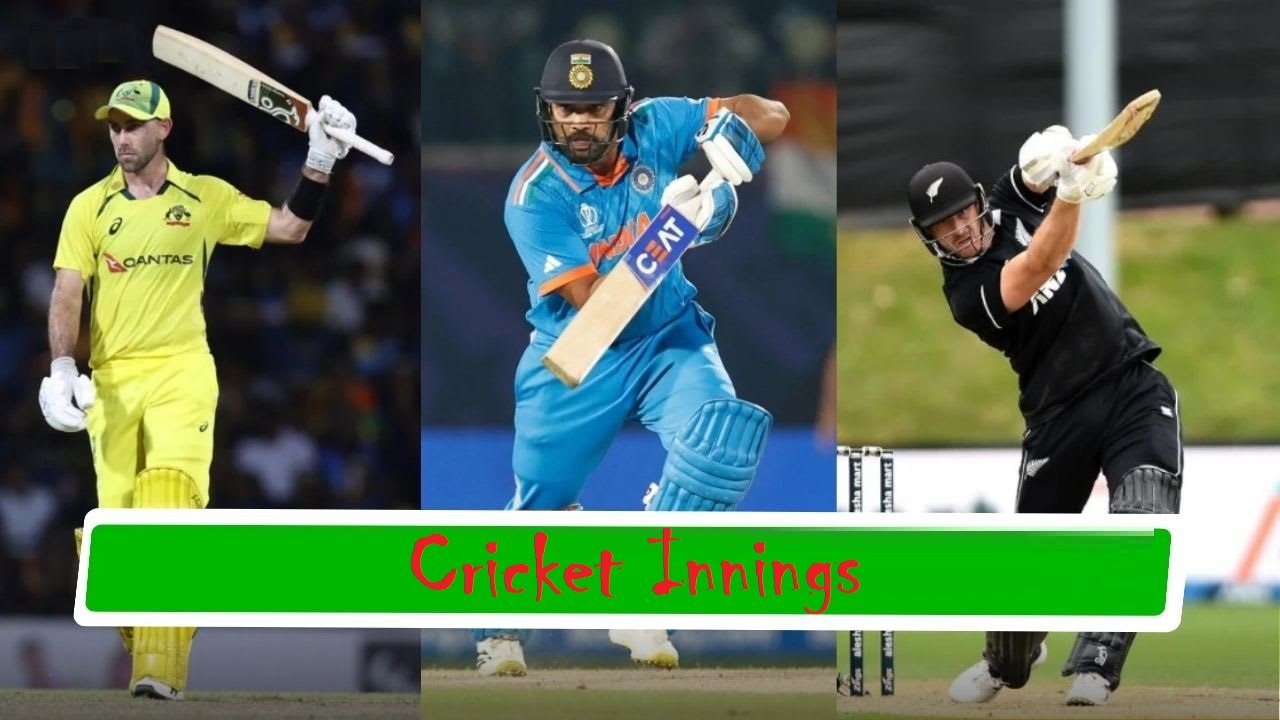
A cricket innings is one of the most crucial concepts in the game of cricket. Every cricket fit revolves around innings, in which one team bats to score runs at the same time as the other team bowls and fields to restrict the entire. Whether you are watching a Test match, One Day International (ODI), or T20 game, knowing how an innings works allows you to experience cricket much more.
The range of innings performed in a fit relies on the layout. Test cricket allows each group two innings, while ODI and T20 matches permit at most one innings per group. Every innings ends in step with the policies of that format, along with losing all wickets, finishing the allocated overs, or correctly chasing the goal.
In this designated guide, we explain the whole thing you want to recognize about cricket innings, such as its rules, length, strategies, famous records, and often requested questions.
What Is a Cricket Innings?
A cricket innings is the length of time during which one team bats to score runs while the other team bowls and fields.
An innings starts whilst the outlet batters come to the crease after the toss and ends while:
- The batting Team is all out.
- The allocated overs are completed (restrained-overs cricket).
- The captain declares the innings (Test cricket).
- The batting team efficaciously reaches the goal.
Each innings contributes to the very last end result of the fit.
Cricket Innings in Different Formats
| Cricket Format | Innings Per Team | Overs Per Innings | Main Objective |
|---|---|---|---|
| Test Cricket | 2 | Unlimited | Score more runs across two innings |
| ODI Cricket | 1 | 50 Overs | Score maximum runs in 50 overs |
| T20 Cricket | 1 | 20 Overs | Score quickly within 20 overs |
| T10 Cricket | 1 | 10 Overs | Aggressive batting throughout |
The structure of the innings modifications is consistent with the format, making each model of cricket precise.
How does an inning start?
Every innings starts well after the toss.
The toss-winning captain decides whether to:
- Bat first
- Bowl first
The batting side sends two established batters to the crease, even as the fielding side positions eleven players on the sphere.
The bowler can provide the first ball, officially beginning the innings.
How Does a Cricket Innings End?
An innings can result in several approaches.
1. Team Is All Out
If ten batters are brushed off, the innings ends because only one batter remains.
Example:
- Team Score: 245 all out
2. Overs Are Completed
In ODI and T20 cricket, the innings automatically ends in any case when the scheduled overs are bowled.
Example:
- ODI: 50 overs finished
- T20: 20 overs finished
3. Successful Run Chase
If the chasing team reaches the goal earlier than dropping all wickets or the usage of all overs, the innings ends right now.
Example:
Target: 281
Team reaches:
281/4 in 47.3 overs
The match ends.
4. Captain Declares
Only in Test cricket can the batting captain claim the innings closed to gain a strategic benefit.
Example:
India pronounces at
510/7
Number of Innings in Different Cricket Formats
| Format | Total Innings in Match |
| Test Match | Up to 4 |
| ODI | 2 |
| T20 | 2 |
| T10 | 2 |
Batting Objectives During an Innings
A batting team goals to:
- Score maximum runs
- Preserve wickets
- Rotate strike
- Build partnerships
- Accelerate on the proper time
- Set or chase a competitive overall
Bowling Objectives During an Innings
The bowling team tries to:
- Take wickets
- Restrict scoring
- Build pressure
- Force mistakes
- Control the run fee
Phases of an ODI Innings
ODI cricket usually has 3 phases.
| Phase | Overs | Strategy |
| Powerplay | 1–10 | Aggressive batting with field restrictions |
| Middle Overs | 11–40 | Rotate, strike and build partnerships |
| Death Overs | 41–50 | Maximum scoring with power hitting |
Phases of a T20 Innings
| Phase | Overs | Purpose |
| Powerplay | 1–6 | Fast scoring |
| Middle Overs | 7–15 | Balance attack and caution |
| Death Overs | 16–20 | Finish strongly |
Test Match Innings Strategy
Unlike white-ball cricket, Test innings requires patience.
Teams try to:
- Bat for long intervals
- Tire the bowlers
- Build huge partnerships
- Score massive totals
- Gain a first-innings lead
Sometimes teams bat for 2 full days for the duration of one innings.
Important Cricket Innings Terminology
| Term | Meaning |
| Innings | Period during which one team bats |
| All Out | Ten wickets lost |
| Declaration | The captain voluntarily ends the innings |
| Follow-on | Team bats again after trailing by the required margin |
| Target | Runs needed to win |
| Partnership | Runs scored by two batters together |
| Extras | Runs not scored from the bat |
| Run Rate | Average runs scored per over |
Types of Dismissals That Can End a Batter’s Innings
A batter’s innings may additionally be stopped by using:
| Dismissal | Description |
| Bowled | Ball hits the stumps |
| Caught | Fielder catches the ball before it touches the ground |
| LBW | Leg Before Wicket |
| Run Out | Batter fails to reach the crease |
| Stumped | Wicketkeeper removes bails while batter is out of crease |
| Hit Wicket | Batter dislodges own stumps |
| Obstructing the Field | Batter illegally obstructs fielders |
| Timed Out | New batter fails to arrive in time |
Importance of Partnerships in an Innings
Winning innings are regularly built by robust partnerships.
Benefits encompass:
- Stability
- Pressure on bowlers
- Easy strike rotation
- Bigger totals
- Reduced wicket loss
Many well-known ODI and Test victories have been constructed on century partnerships.
Highest Team Innings Totals
| Format | Highest Team Total |
| Test Cricket | 952/6 declared (Sri Lanka vs India, 1997) |
| ODI Cricket | 498/4 (England vs Netherlands, 2022) |
| T20 International | 344/4 (Zimbabwe vs Gambia, 2024) |
These totals show how dominant a batting innings can be under favorable situations.
Lowest Team Innings Totals
| Format | Lowest Total |
| Test Cricket | 26 |
| ODI Cricket | 35 |
| T20 International | 10 |
These innings are remembered for first-rate bowling performances and difficult batting conditions.
What Makes a Great Batting Innings?
A memorable innings commonly includes:
- Excellent shot selection
- Strong concentration
- Smart walking among wickets
- Match attention
- Adaptability to conditions
- Ability to deal with strain
Some innings become mythical because they help a crew win hard suits.
Role of Pitch in an Innings
The pitch has a prime effect on batting.
| Pitch Type | Effect on Innings |
| Flat Pitch | High-scoring innings |
| Green Pitch | Helps fast bowlers |
| Dry Pitch | Assists spin bowlers |
| Cracked Pitch | Difficult batting late in Test matches |
Factors Affecting a Cricket Innings
Several factors influence how an innings unfolds:
- Pitch conditions
- Weather
- Toss result
- Bowling assault
- Field placements
- Batting intensity
- Pressure conditions
- Match layout
Difference Between Test and Limited-Overs Innings
| Feature | Test | ODI/T20 |
| Overs | Unlimited | Fixed |
| Declaration | Yes | No |
| Run Rate | Less important | Very important |
| Batting Style | Patient | Aggressive |
| Innings Per Team | Two | One |
Common Mistakes During an Innings
Teams regularly lose matches because of:
- Poor shot selection
- Losing wickets fast
- Slow scoring in restrained overs
- Weak partnerships
- Poor strolling between wickets
- Panic below strain
Avoiding those mistakes usually results in stronger batting performances.
Why Is Every Innings Different?
No innings are the same because conditions constantly change.
Factors encompass:
- Opposition fine
- Ground dimensions
- Weather
- Pitch behavior
- Match the state of affairs
- Target pressure
This unpredictability is one reason cricket remains one of the most interesting sports.
Frequently Asked Questions (FAQs)
What is an innings in cricket?
An innings is the length for the duration of which one group bats whilst the other group bowls and fields.
How many innings are there in Test cricket?
Each group can bat twice, allowing as much as four innings in a set.
How many innings are there in ODI cricket?
Each team bats as soon as, so there are innings in total.
What ends an innings?
An innings ends when a group is all out, completes its overs, reaches the target, or is dismissed in Test cricket.
Can a captain declare an innings in ODI or T20 cricket?
No. Declaration is most effectively allowed in Test and different forms of cricket.
Why are partnerships vital?
Partnerships assist construct huge totals, lessen stress, and increase the chances of prevailing.
Conclusion
A cricket innings is the muse of each cricket match. It determines how many runs a group scores, how efficaciously it chases a target, and in the long run, who wins the game. While Test cricket emphasizes endurance and endurance over a couple of innings, ODI and T20 cricket demand short scoring within confined overs.
Understanding how innings begin, stop, and vary across codecs enables both new and skilled lovers to appreciate the tactical intensity of cricket. From building partnerships and handling wickets to accelerating at the right time, every successful innings combines ability, planning, and teamwork. Whether watching worldwide cricket, domestic competitions, or neighborhood suits, understanding the position of an innings presents a deeper knowledge of the sport.