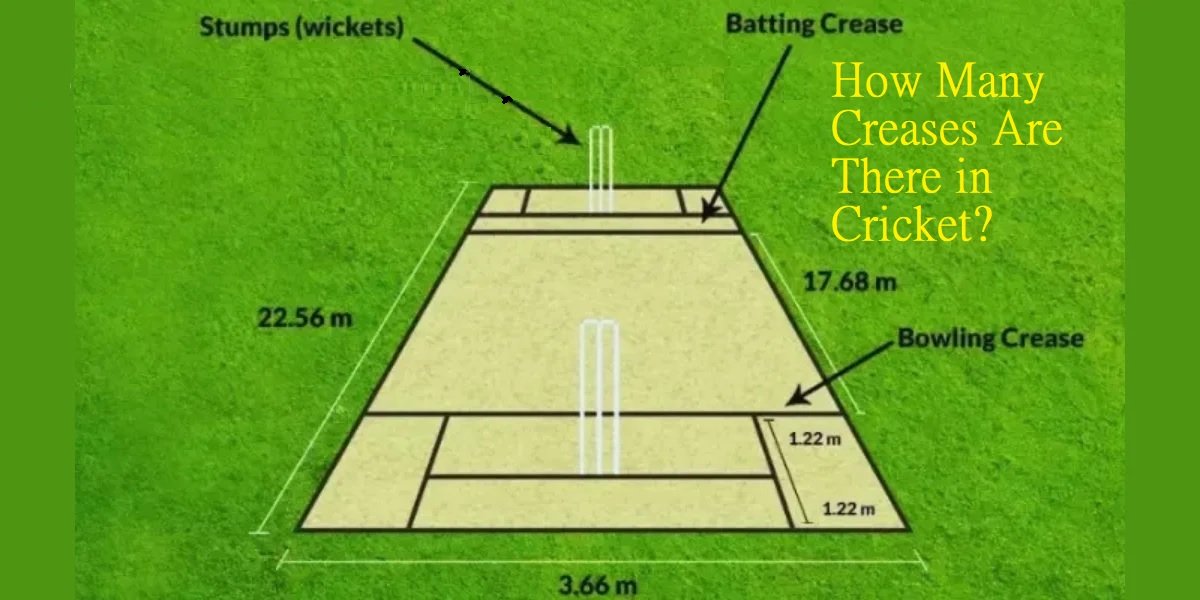
How Many Creases Are There in Cricket?
If you’ve got ever watched a cricket match, you have got likely noticed numerous white lines marked on each end of the pitch. These lines are known as creases, and they play a crucial role in the game. They decide whether or not a batter is secure, whether a bowler has bowled a wide ball, and whether or not a run-out or stumping is valid.
Many beginners regularly ask, “How many creases are there in cricket?” The easy solution is that there are 4 types of creases at each end of the cricket pitch:
- Bowling Crease
- Popping Crease (also called the Batting Crease)
- Two Return Creases
Since a cricket pitch has ends, the markings appear on each end. In this manner, there are 8 crease traces drawn across the complete pitch, although they represent 4 one-of-a-kind varieties of creases at every stop.
In this comprehensive guide, you will analyze the whole lot approximately cricket creases, along with their measurements, functions, and the legitimate laws governing them.
Quick Answer
| Feature | Details |
|---|---|
| Number of crease types | 4 |
| Creases at each end | Bowling Crease, Popping Crease, Two Return Creases |
| Ends on a cricket pitch | 2 |
| Total crease lines on the pitch | 8 |
| Governed by | MCC Laws of Cricket |
| Main purpose | Batting, bowling, run-out, stumping, and no-ball decisions |
What Is a Cricket Crease?
A crease is a line marked with white paint or chalk on the cricket pitch. These lines assist the umpires in determining whether players are following the regulations.
Creases are vital because they determine:
- Whether a batter is within their ground
- Whether a bowler has overstepped
- Whether a batter can be stumped
- Whether a run-out is legitimate
- Whether a ship is prison
Without crease markings, many essential choices at some stage in a cricket fit could be impossible.
How Many Creases Are There in Cricket?
The correct answer is:
There are 4 kinds of creases at every end of the pitch.
These include:
| Crease Type | Number at One End | Purpose |
|---|---|---|
| Bowling Crease | 1 | Position of the stumps |
| Popping Crease | 1 | Safe line for batters |
| Return Crease | 2 | Bowling delivery limit |
Total Crease Lines
| Pitch End | Number of Lines |
|---|---|
| First End | 4 |
| Second End | 4 |
| Entire Pitch | 8 |
Types of Creases in Cricket
Understanding every crease one at a time makes cricket plenty less difficult to analyze.
1. Bowling Crease
The bowling crease is the line where the 3 stumps are placed.
It is the important reference point for almost every measurement on the pitch.
Features
- Passes immediately through the middle of the stumps
- Length: 8 ft 8 inches (2.64 metres)
- Used to put the wicket successfully
- Forms the basis for marking different creases
Uses
- Placement of wickets
- Pitch measurements
- Umpire references
Bowling Crease Measurement
| Specification | Measurement |
|---|---|
| Length | 8 ft 8 in |
| Metric | 2.64 metres |
| Position | Through the stumps |
2. Popping Crease (Batting Crease)
The popping crease is one of the most essential strains in cricket.
It is frequently known as the batting crease because a batter must keep some part of their bat or frame grounded at the back of this line to keep away from being run out or stumped.
Distance from Bowling Crease
The popping crease is marked:
4 ft (1.22 metres) in front of the bowling crease.
Why Is It Important?
This crease decides:
- Run-outs
- Stumpings
- Safe completion of runs
- Batter’s floor
Whenever the batter crosses this line without grounding the bat or frame at the same time as the wicket is damaged, they may be dismissed.
Popping Crease Facts
| Feature | Measurement |
|---|---|
| Distance from bowling crease | 4 feet |
| Metric | 1.22 metres |
| Main purpose | Batter’s safety line |
Why Is It Called the Batting Crease?
Although the legitimate Laws of Cricket refer to it as the popping crease, many players and commentators casually name it the batting crease because it marks the batter’s safe area.
Both names typically confer with the equal crease.
3. Return Crease
Each give-up of the pitch has two return creases.
These creases run perpendicular to the bowling crease.
Main Purpose
The go back creases ensure that bowlers supply the ball from a felony role.
If a bowler’s returned foot lands outside the return crease at some stage in shipping, the umpire can name a No Ball.
Return Crease Facts
| Feature | Details |
|---|---|
| Number | Two at each end |
| Direction | Vertical |
| Used for | Legal bowling action |
| Important for | No-ball decisions |
Return Crease Measurements
| Measurement | Value |
|---|---|
| Distance from middle stump | 4 feet 4 inches |
| Metric | 1.32 metres |
These measurements ensure equity for both bowlers and batters.
Complete Cricket Crease Measurements
| Crease | Length | Distance |
|---|---|---|
| Bowling Crease | 8 ft 8 in | Through stumps |
| Popping Crease | Unlimited (minimum marked length 12 ft / 3.66 m) | 4 ft in front of bowling crease |
| Return Crease | Extends behind popping crease | 4 ft 4 in from middle stump |
Diagram of Cricket Creases
      Return Crease
           |
           |
—————————————————————- Popping Crease
|
============ Bowling Crease
Stumps
|
|
Return Crease
This layout is repeated at both ends of the cricket pitch.
Why Are Cricket Creases Important?
Every crease has a specific reason. Together, they make sure that the sport is performed pretty and in line with the Laws of Cricket.
Creases Help Umpires Decide
| Situation | Crease Used |
|---|---|
| Run Out | Popping Crease |
| Stumping | Popping Crease |
| No Ball | Return Crease & Popping Crease |
| Position of Stumps | Bowling Crease |
| Legal Delivery | Return Crease |
Common Misconceptions About Cricket Creases
Many cricket fans misunderstand the quantity and purpose of the crease lines. Here are some not unusual myths:
| Myth | Fact |
|---|---|
| There are only two creases on the pitch. | There are four types of creases at each end. |
| Batting crease and popping crease are different. | They refer to the same line in common usage. |
| Only batters use the crease. | Bowlers also rely on crease markings for legal deliveries. |
| Creases are only for professional cricket. | They are marked in almost all formal cricket matches. |
Official MCC Laws About Cricket Creases
The Marylebone Cricket Club (MCC) writes and maintains the legitimate Laws of Cricket followed around the world. According to the MCC, crease markings are essential for honest play and are used to choose legal deliveries, run-outs, stumpings, and different critical decisions.
Some key points consist of:
- The bowling crease passes through the middle of the 3 stumps.
- The popping crease is 4 ft (1.22 metres) in front of the bowling crease.
- There are return creases at each end of the pitch.
- Umpires use these markings to determine whether a delivery is a felony and whether or not a batter is effectively within their floor.
Difference Between All Cricket Creases
Many beginners confuse the different crease names. The table underneath clearly explains the variations.
| Crease | Main Purpose | Used By | Important Decisions |
|---|---|---|---|
| Bowling Crease | Marks the position of the stumps | Umpires | Pitch measurements |
| Popping (Batting) Crease | Batter’s safe line | Batter | Run-out, Stumping |
| Return Crease | Bowling limit | Bowler | No Ball |
How Creases Affect a Cricket Match
Creases are involved in nearly every innings. They influence several important choices made by way of the umpires.
1. Run-Out Decisions
A batter is considered secure if some part of their bat or body is grounded behind the popping crease whilst the wicket is positioned down.
If the wicket is broken earlier than the batter reaches the crease, the batter can be declared Run Out.
Example
- Batter dives closer to the crease.
- The bat crosses and touches the floor in the back of the popping crease.
- The wicket is damaged afterward.
- Decision: Not Out.
2. Stumping Decisions
During a stumping attempt:
- The batter leaves the popping crease.
- The wicketkeeper collects the ball.
- The bails are eliminated earlier than the batter returns.
If no part of the batter or bat is grounded behind the crease, the umpire offers the batter Out Stumped.
3. No-Ball Decisions
The go back crease and popping crease are very essential for bowlers.
A bowler might also bowl a No Ball if:
- The front foot lands past the popping crease.
- The back foot lands outside the go-back crease.
These regulations prevent bowlers from gaining an unfair benefit.
Which Crease Is Most Important?
Although all creases are important, the popping crease is the most regularly discussed throughout matches as it determines:
- Run-outs
- Stumpings
- Safe completion of runs
- Whether a batter has made their ground
The return crease is equally important for bowlers, as stepping outside it can result in a no-ball.
Cricket Pitch Measurements
Understanding the pitch dimensions allows explain why crease positions are so important.
| Measurement | Size |
|---|---|
| Pitch Length | 22 yards (20.12 metres) |
| Pitch Width | 10 feet (3.05 metres) |
| Bowling Crease | 8 ft 8 in (2.64 m) |
| Distance to Popping Crease | 4 ft (1.22 m) |
| Return Crease Distance | 4 ft 4 in (1.32 m) from the middle stump |
Uses of Each Cricket Crease
| Crease | Primary Function | Used During |
|---|---|---|
| Bowling Crease | Position of stumps | Entire match |
| Popping Crease | Batter’s safe area | Batting, Running |
| Return Crease | Bowler’s legal position | Bowling |
Interesting Facts About Cricket Creases
- Every widespread cricket pitch has crease markings at each end.
- Creases are painted the use of white chalk or unique marking paint.
- Television broadcasters frequently use technology to determine whether or not a batter or bowler has crossed a crease.
- Third umpires rely closely on crease digital camera angles for run-out and stumping selections.
- Modern global suits use high-speed cameras to check front-foot no-balls with superb accuracy.
- Even a tiny part of the bat grounded behind the popping crease can stop a batter from being run out.
- The crease markings are inspected earlier than each expert fit to ensure they meet respectable requirements.
Common Mistakes Beginners Make
| Mistake | Correct Information |
|---|---|
| Thinking there are only two creases | There are four types of creases at each end of the pitch. |
| Confusing bowling crease with popping crease | They have different positions and purposes. |
| Believing the bat must cross completely | Only part of the bat or body needs to be grounded behind the popping crease. |
| Assuming return creases are for batters | Return creases are mainly used to judge legal bowling actions. |
Frequently Asked Questions (FAQs)
1. How many creases are there in cricket?
There are 4 sorts of creases at each end of the pitch:
- One bowling crease
- One popping (batting) crease
- Two go back creases
Since there are two ends, the pitch carries eight crease lines in total.
2. What is the batting crease known as?
The batting crease is formally known as the popping crease.
3. How far away is the popping crease from the bowling crease?
The popping crease is four toes (1.22 metres) in front of the bowling crease.
4. Why is the go-back crease essential?
It ensures that bowlers supply the ball from a prison position. Stepping outside it with the returned foot can result in a No Ball.
5. Which crease is used for run-out decisions?
The popping crease is used to determine whether the batter has safely made their ground.
6. Which crease passes through the stumps?
The bowling crease passes through the middle of the three stumps.
7. Are crease measurements the same in all worldwide suits?
Yes. International cricket follows the professional MCC Laws of Cricket, so the measurements continue to be the same.
8. Who comes to a decision the official cricket crease measurements?
The Marylebone Cricket Club (MCC) defines the official Laws of Cricket, along with all crease measurements.
9. Can a batter be out if their bat is inside the air over the crease?
Yes. The bat or frame should be grounded behind the popping crease. Simply being over the road within the air does not make the batter safe.
10. How many return creases are there?
There are two return creases at every crease, making 4 go-back creases across the whole pitch.
Conclusion
If you’ve ever wondered “how many creases are there in cricket?”, the solution is simple: there are 4 sorts of creases at each end of the cricket pitch—the bowling crease, popping (batting) crease, and two return creases. Because a cricket pitch has ends, those markings are repeated, resulting in 8 crease traces across the complete pitch.
Each crease serves a specific purpose. The bowling crease marks the position of the stumps, the popping crease determines whether a batter is effectively within their ground, and the return creases assist umpires in deciding whether or not a bowler has delivered the ball legally. Together, those markings are essential to decisions related to run-outs, stumpings, no-balls, and prison deliveries.